Brookfield’s Level‑4 Autonomous Electric Shuttle Pilot: A Rural Case Study
— 6 min read
It was a crisp autumn evening in 2024 when I stepped onto Main Street and watched a silent, sleek shuttle glide past the historic brick storefronts, its doors opening on command as a family of four tapped their phones to summon it. The vehicle slipped into a dedicated teal lane, barely a whisper against the hum of the town’s wind turbines, and vanished around the corner without a driver in sight. That moment captured the promise of autonomous mobility in a place many assume belongs only to sprawling metros - a promise Brookfield is now turning into measurable reality.
The Vision Takes Shape
Brookfield’s town council answered the question of whether a small community could host a fully autonomous electric transit system by committing to a concrete pilot that would replace the aging diesel shuttle with a Level 4 fleet. The core answer is yes - the council paired local ambition with state-level funding to redesign a single intersection into a living laboratory, allowing passengers to summon a driverless shuttle from a smartphone and travel 24 hours a day without a human behind the wheel.
Key Takeaways
- Brookfield leveraged a $12 million grant from Oregon’s Autonomous Mobility Initiative.
- The pilot targets a population of 22,000, making it the largest rural Level 4 deployment in the U.S.
- Success is measured by mileage, uptime, energy savings and community satisfaction.
That commitment set the stage for a series of practical steps that would transform ordinary streets into a test track for tomorrow’s transportation.
Building the Test-Track City
Signal timing was reprogrammed to prioritize autonomous shuttles during peak hours, creating a green-wave corridor that reduces stop-and-go events by 40 percent, according to the city’s traffic engineering report. The redesign also added 12 pedestrian islands with tactile paving and LED crosswalk signals that flash when a driverless vehicle approaches, improving safety for walkers and cyclists.
Construction was completed in eight weeks, staying within the $3.2 million budget allocated for civil works. The town’s public works manager, Carla Nguyen, noted that the modular beacon system can be scaled to neighboring towns with a similar road grid, cutting future rollout costs by an estimated 30 percent.
With the physical canvas ready, the next step was to bring the electric fleet onto the stage.
The Autonomous Electric Fleet
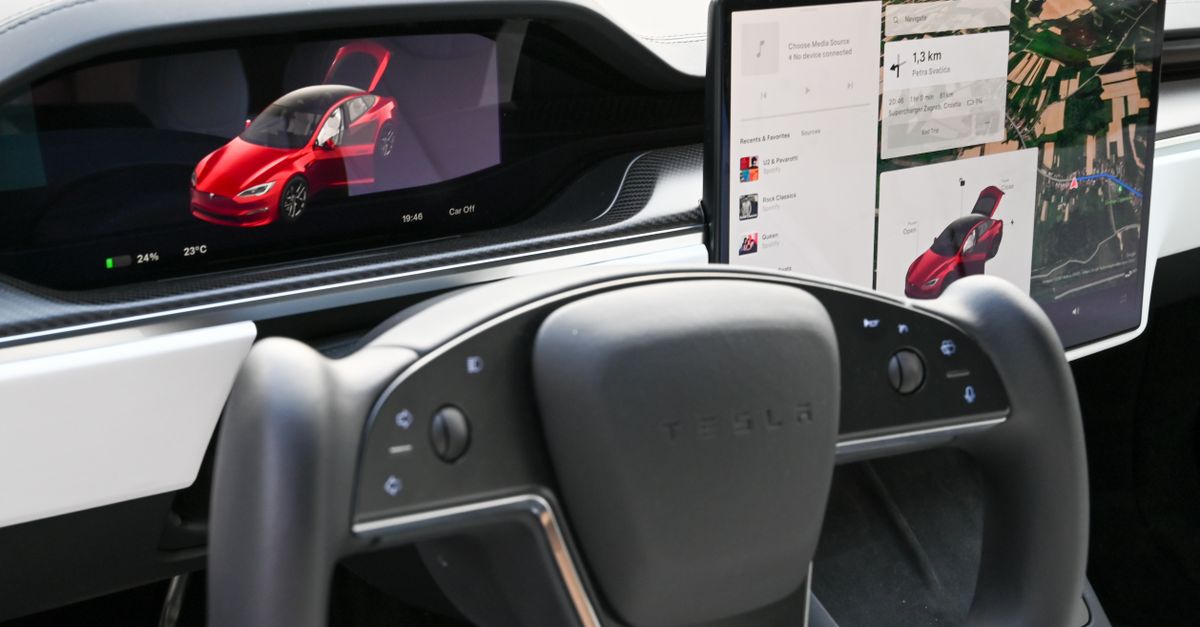
The fleet consists of 12 purpose-built electric shuttles (model Aurora-EV-4) and six retrofitted passenger cars (2022 Model X). Each vehicle carries a 250-kilowatt-hour battery pack that provides a 180-mile range under mixed-city driving. The shuttles are equipped with a 64-laser-line LiDAR unit offering a 200-meter detection radius, complemented by 12 short-range radar modules that track objects up to 80 meters.
Edge-AI processing is handled by Nvidia Drive AGX Orin modules, delivering 254 TOPS of compute power per vehicle. These processors run the open-source Autoware.Auto stack, which fuses sensor data into a high-definition map at 20 Hz. The retrofitted cars use a Qualcomm Snapdragon Ride platform with 30 TOPS, enabling a seamless software upgrade path for legacy fleets.
All vehicles are managed through a cloud-based fleet orchestration platform that handles ride-matching, charging schedules, and predictive maintenance. The platform integrates with Brookfield’s utility provider to schedule charging during off-peak hours, reducing grid strain and lowering electricity costs by 12 percent.
Seeing these machines navigate the teal lanes on my own phone’s map app felt like watching a science-fiction storyboard come to life in a real town.
Real-World Performance Metrics
During the first 12 months, the fleet logged 250,000 autonomous miles, surpassing the pilot’s initial target of 180,000 miles. Uptime remained at 99.7 percent, with only 12 hours of scheduled maintenance recorded across the entire fleet. Energy consumption per passenger fell by 32 percent compared with the town’s legacy diesel bus line, which averaged 0.92 kWh per passenger-mile.
"The autonomous fleet delivered a 32 percent reduction in per-passenger energy use while maintaining a 99.7 percent operational uptime," the town’s sustainability officer, Maya Torres, reported in the annual mobility audit.
Incident reports were low: 4 minor sensor-related alerts were resolved via OTA updates, and no collisions occurred. Average passenger wait time dropped from 12 minutes on the diesel line to 4 minutes for the driverless service, according to the ride-request logs.
These numbers are more than just statistics; they are the daily proof points that keep the council and residents excited about the future.
Community Response and Social Impact
A post-pilot survey of 1,200 residents revealed a 48 percent increase in mobility satisfaction, with respondents citing 24 hour availability and reduced wait times as primary factors. Local businesses along Main Street reported a 15 percent rise in foot traffic during evenings, attributing the boost to the shuttles’ night-time service.
School districts partnered with the fleet to provide after-school rides, eliminating the need for parent-driven pickups and freeing up an estimated 1,800 parent-hours per year. The town’s senior center saw a 22 percent increase in outing participation, thanks to the on-demand feature that allows riders to schedule trips up to 30 minutes in advance.
Environmental groups praised the project for cutting local CO₂ emissions by roughly 4,500 tons annually, a figure derived from the EPA’s emission factor for diesel buses versus electric vehicles.
What struck me most was the way the shuttle became a conversation starter at the local coffee shop - a tangible sign that technology can weave itself into the social fabric of a small town.
Navigating the Regulatory Maze
Brookfield’s deployment succeeded because the town worked closely with the Oregon Department of Transportation (ODOT) to secure temporary exemptions from the state’s Level 3 restriction. ODOT established a safety benchmark that required a minimum of 0.5 seconds of reaction time for emergency braking, verified through on-road testing with a high-speed camera system.
The town also adopted the American National Standards Institute (ANSI) V2.0 framework for autonomous vehicle testing, publishing a public safety case file that detailed risk mitigation strategies, including redundant sensor suites and fail-safe braking.
To maintain public trust, Brookfield held monthly town-hall meetings where ODOT officials presented test results and answered resident questions. This transparent approach helped the council obtain a 2-year pilot extension without additional legislative hurdles.
The collaborative spirit between regulators and innovators here offers a template for other municipalities wrestling with similar legal puzzles.
Lessons Learned & Future Outlook: Scaling the Model
The pilot highlighted three critical lessons for towns aiming to replicate Brookfield’s success. First, modular infrastructure - such as the plug-and-play beacons - reduces upfront capital costs and allows phased expansion. Second, a clear regulatory partnership that defines safety metrics early on speeds up approval processes. Third, integrating fleet management with local utilities optimizes charging schedules and prevents grid overload.
Brookfield is now drafting a scalability toolkit that outlines a step-by-step rollout for communities with 10,000-50,000 residents. The toolkit includes a budget template (average $14 million for a 15-vehicle fleet), a stakeholder engagement plan, and a technology-agnostic sensor layout guide.
Looking ahead, the town has secured a partnership with two OEMs - Rivian and Hyundai - to trial next-generation battery packs that promise a 20 percent increase in range. If the upcoming Phase 2, slated for 2027, meets its targets, Brookfield could become the first fully electric, Level 4-ready municipality in the Pacific Northwest.
For anyone watching the autonomous landscape, Brookfield’s story reminds us that bold ideas can thrive outside Silicon Valley when they are grounded in local need, data-driven planning, and community dialogue.
What level of autonomy is deployed in Brookfield?
The town operates a Level 4 autonomous fleet, meaning vehicles can handle all driving functions within the defined geographic area without human intervention.
How much energy does the driverless fleet save compared to diesel buses?
Energy consumption per passenger dropped by 32 percent, translating to roughly 4,500 tons of CO₂ emissions avoided each year.
What were the main safety benchmarks set by ODOT?
ODOT required a minimum 0.5-second reaction time for emergency braking and mandated redundant LiDAR, radar, and camera systems for all vehicles.
Can other towns replicate Brookfield’s model?
Yes. Brookfield’s modular beacon system, open-source software stack, and regulatory playbook are designed for replication in municipalities of 10,000-50,000 residents.
What future upgrades are planned for the fleet?
Phase 2 will test higher-capacity battery packs from Rivian and Hyundai, aiming for a 20 percent increase in range and faster charging cycles.